Four weeks is a manageable period for implementing a specific improvement and collecting initial observations. It is not automatically long enough to attribute a business result clearly to one activity. A useful plan therefore separates the work you intend to finish from the outcome you will subsequently observe.
Start with a decision rather than a list of channels. What should be better understood or easier to do after four weeks? One business might want to understand why so many enquiries come from outside its service area. Another may need to explain a service that customers repeatedly misunderstand. Both projects can be worthwhile, but they require different tasks and observations.
Choose a problem supported by existing evidence
Collect a few concrete signals from daily work: repeated customer questions, incomplete enquiries, outdated information or a contact route that regularly causes difficulty. Describe the problem so that someone outside the team could understand it. “More visibility” is usually too broad for this purpose. “People do not know which towns we serve” points toward more specific work.
Then choose one main focus. Small essential corrections can still happen alongside it, but they should not quietly become additional projects. Write down what these four weeks will deliberately exclude. This protects available time and turns any later expansion into a conscious decision rather than an unnoticed accumulation of work.
For a local trade business, the focus might be to explain its service area on the most important service page and observe the suitability of incoming enquiries. That wording does not promise a particular number of new jobs. It connects an achievable change with a question that matters to the business.
Define what completed work will look like
First establish how you will recognize a finished task. In the example, completion includes approved copy, a presentation that remains readable on a phone and a functioning contact route. A draft in a shared folder is not yet a published improvement. Give each task an observable completion condition and a named owner.
Separately decide what to observe. For geographic suitability, enquiries could be classified as inside the area, outside the area or unclear. Keep the criteria simple and apply them consistently throughout the period. Record only the information needed for that purpose, avoiding extra personal details that have no clear use in the review.
An initial observation helps put later developments in context. If comparable information has not previously been recorded, say so. The first weeks may mainly establish a reliable collection process. Missing baseline evidence cannot be replaced with confident estimates created after the event.
Order the weeks around dependencies
Use the first week to check the problem and define the scope. This might include reading recent questions and opening the current page on a phone. The aim is to justify a particular change, rather than to collect the largest possible list of ideas. End the week with a clear enough brief that the next person can begin work.
The second week can cover writing, presentation and approval. Reserve time with whoever needs to verify factual statements. If their feedback is missing, publication may move; approval therefore belongs in the plan as a task in its own right. Not every step is controlled by the person writing the schedule.
In the third week, implement and check the change. Test the actual route from arriving on the page to making contact. Record the publication date and other significant changes. If an advertisement starts at the same time or opening hours change, that context belongs with the later observations.
Use the fourth week for an initial review and a decision about what happens next. With only a few enquiries, the result may remain inconclusive. The appropriate decision could be to continue collecting information instead of introducing another change immediately. A short planning period does not require a definite verdict on business success.
Connect the schedule to available time
Before starting, check whether the tasks fit the time genuinely available. Include ongoing maintenance, questions and required approvals. If capacity is limited, reduce the scope: improve one important page instead of five, or make one testable change instead of attempting a complete redesign. Removing work from the plan is often more realistic than assuming every task will take less time.
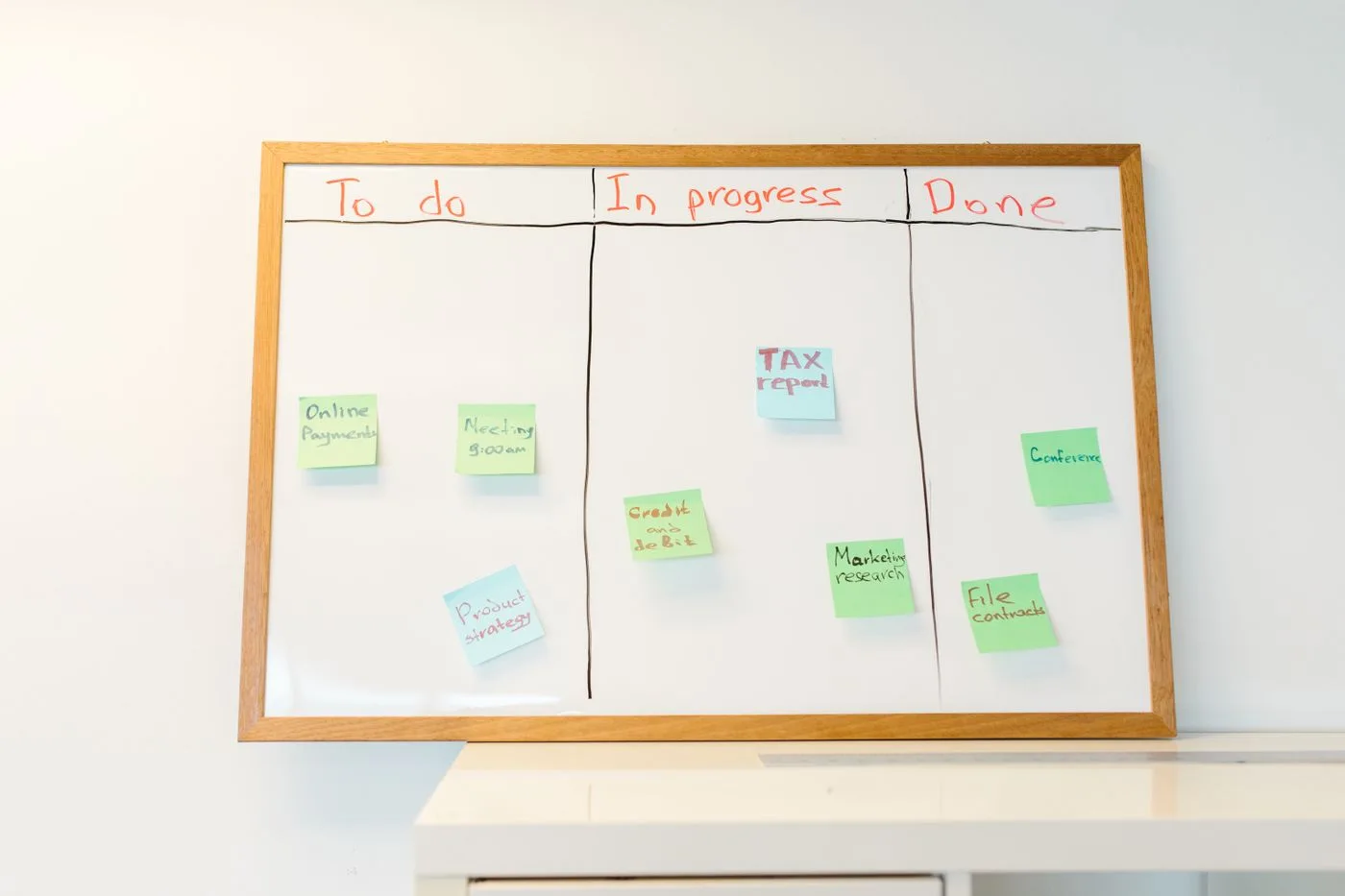
Keep the plan in one shared document or simple task view. Each task needs a purpose, owner, date, required input and completion condition. A short weekly check should identify what is blocked and which decision is needed. Additional reporting is worthwhile only when someone will use it to move the work forward.
At the end, compare planned work with what was actually completed. Separate observations from explanations: fewer unsuitable enquiries is an observation, while claiming the new wording alone caused that change is a stronger conclusion. Record what is known, what remains uncertain and the next decision supported by the evidence. The four-week plan can then produce a clear next step even when the business outcome needs more time to develop.